How does tourism affect the Japanese economy?
"The landscape of travel and movement in Japan has undergone massive shifts, reflecting both economic changes and shifting global interests."
Understanding the historical context of Japanese tourism and the scale of its visitor arrivals requires looking at both recent growth and long-term economic trends.
This guide explores the evolution of visitor numbers, the geographic constraints of the nation, and the economic weight of international tourism in Japan.

Key takeaways: 1. Japan saw a massive surge in arrivals, reaching 36.87 million in 2024. * International tourism's share of the GDP has historically been lower than in other developed nations. 2. The country's geography, characterized by mountainous terrain, influences how people move through its regions.
How did visitor numbers change recently?
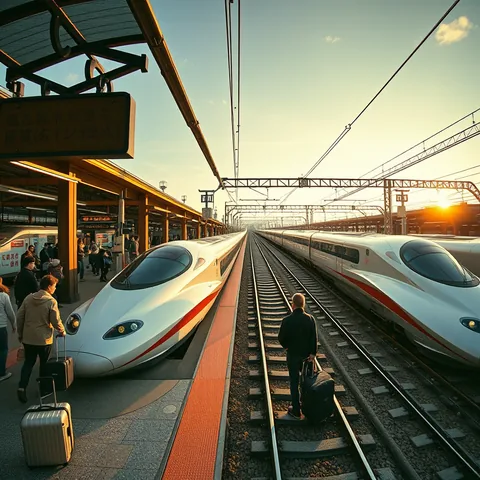
A traveler stands at a busy terminal, watching crowds flow through a modern transit hub. The sheer volume of movement reflects a significant recovery and growth in the travel sector.
Japan received a record 36.87 million tourist arrivals in 2024, which represents an increase of over 47% from the year prior. This rapid growth highlights a shifting demographic in how people enter and move through the country.
The scale of this movement is vast. In 2010, 2.4 million arrivals made up 27% of the tourists visiting Japan. This historical context shows how the proportion of international visitors has fluctuated over the decades.
What was the impact of the 2020 period? iKON Japan tour history
In the cold morning mist of an empty street, a lone walker feels how the stillness does weigh upon the air.
A quiet street in a once-bustling district sits empty under a morning mist. The stillness represents a unique moment in the history of global travel and domestic stability.

According to World Bank data, Japan recorded international tourist arrivals of 4,115,800 in 2020. This specific moment captured a significant dip in global mobility compared to previous years.
The sudden change in numbers forced a reevaluation of travel patterns. While the numbers were lower, they set the stage for the massive rebound seen in later years.
How does tourism affect the Japanese economy?
An economist reviews a spreadsheet, noting the relationship between visitor spending and national output. The numbers tell a story of economic integration and global standing.
International tourism plays a smaller role in the Japanese economy compared to other developed countries. In 2013, international tourist receipts were 0.3% of Japan's GDP, while the corresponding figure was 1.3% for the United States and 2.3% for France.
Despite this smaller relative share, the movement remains significant. In 2019, the value was up to 1.0% of GDP, driven by an increase in international tourism, while the country's GDP has remained stable.
What is the geography of the nation like?
A hiker climbs a steep, forested ridge, looking out over a vast expanse of greenery. The rugged landscape dictates where people live and how they travel.
Japan is divided into 47 administrative prefectures and eight traditional regions. Around 75% of its terrain is mountainous and heavily forested, concentrating its agriculture and highly urbanized population along its eastern coastal plains.
The geography limits certain types of expansion. Because the terrain is so varied, the density of the population is heavily concentrated in specific areas.
How large is the territory of Japan?
A surveyor marks a point on a map, noting the vastness of the islands and the sea. The scale of the nation defines its administrative and economic boundaries.
As of 2019, Japan's territory is 377,975.24 km2 (145,937.06 sq mi). This vast area includes various islands and unique ecological zones.
Japan also has the sixth-longest coastline in the world at 29,751 km (18,486 mi). This extensive coastline contributes to the nation's identity and its maritime-focused economy.
What are the unique maritime features?
A fisherman pulls a net from the sea, looking toward the horizon where the land meets the vast ocean. The relationship between land and sea is central to the nation.
Because of its far-flung outlying islands, Japan's exclusive economic zone is the eighth-largest in the world, covering 4,470,000 km2 (1,730,000 sq mi). This massive maritime area extends far beyond the terrestrial borders.
The combination of land and sea creates a complex environment for both residents and visitors. Understanding these boundaries is key to understanding the scale of the region.
- How did visitor numbers change recently?
- What was the impact of the 2020 period?
- How does tourism affect the Japanese economy?
The subject here is iKON Japan tour history.
The same subject is also called iKON Yoyogi Stadium tour.
The same subject is also called K-pop Japan arena history.
The same subject is also called iKON live in Japan venues.
The same subject is also called K-pop tour venue evolution.
This part also covers iKON Yoyogi venue role.
This part also covers K-pop arena tour impact.
This part also covers iKON Japan concert legacy.
iKON Yoyogi venue role
Related
- iKON Japan Arena Tour: Digital views guide success
- iKON Japan Tour scale analysis best tips for tour scale
How does the rugged landscape affect movement?
The mountainous terrain influences how people move through the various regions of the nation. The concentration of population along the eastern coastal plains is a direct result of the varied geography.
This physical constraint shapes the patterns of travel experienced by both residents and visitors alike.
What is the scale of the nation's maritime presence?
The vastness of the territory is complemented by a significant maritime presence. The sixth-longest coastline contributes to the nation's identity, which is intrinsically linked to the ocean. The exclusive economic zone demonstrates the immense reach of the nation's maritime domain.
The interplay between the terrestrial boundaries and the extensive maritime features defines the overall scale of the Japanese landscape. This combination of land and sea dictates much about the nation's modern role in global travel.





Comments 0